





Personal Revival
Ps.51:17; Hos.10:12; 2Pe.5:1-7; Prov.11:2
The only revival that lasts in a man’s life is the one that started within him. If God does not have us He cannot use us. And God has no dealings with a stony heart, for “the sacrifices of God are a broken spirit; a broken and contrite heart, O God thou will not despise” (Ps.51:17).
Lack of brokenness is one of the greatest hindrances to revival and victorious Christian living. A believer, who has this spirit, does not know that he or she is dead even while she lives. The only time God promises blessings and restorations to us is after He has removed our hearts of stone, and replaced it with hearts of flesh (Ezk.36:26-30). An unbroken Christian is so full of himself that he cares less about spiritual things; and is often insensitive to the sufferings of his fellow man.
This state is a result of ignorance or prolonged insensitivity to the prompting of the Holy Spirit, and it is either we have grieved the gentle spirit or we have seared our conscience. We are commanded to “circumcise our hearts and not our flesh”, and the sore is supposed to be ever fresh, if we must experience the compassions of Christ. Jos.5
An unbroken Christian is never sincere with God or man and does not have a sense of remorse. He is so smart; he will always have an excuse for his actions.
When he sins against God, he quickly finds a number of scriptures on God’s promises and gives God a thousand and one reasons why he should not be blamed. When he sins against man, he sees the error in the other person and not in himself, and so there will be no need to ask for forgiveness. He thinks he is so smart and clean but does not know that he is walking into an open sepulcher.
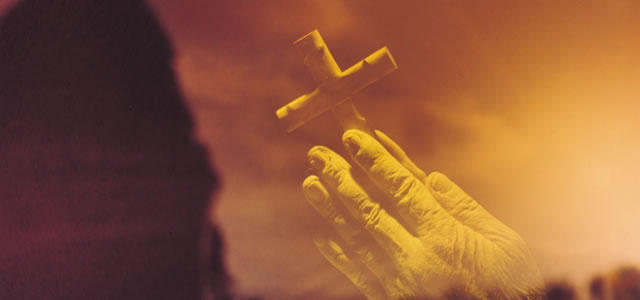
A life of brokenness is a life of love: as it is only the broken hearted who can love. It is the way of the cross.
As we behold the man who died for the sins he never committed, we will remember the one who broke down at the tomb of Lazarus and wept; the one who had compassion on the multitude because they fainted and were like sheep without a shepherd; the one who came to serve and not to be served, the one who so much identified with our infirmities that he was accused of being “besides himself”. And in the attempt to rid us of evil spirits’ control and set us free, he was called ‘Beel-zebub’. Yet having loved his own, he loved them to the end. Breaking his body on that memorable day, He gave us the pieces, so that we can never be whole except in him and as we knit together with one another in Holy Communion.
As we behold him in humble adoration, we will breakdown at the foot of Calvary cross and allow His love to flow into us and through us. Then we will learn to love even as he loved, we will be humble enough to confess our sins one to another and receive our healings. Healings to our broken hearts, the hurt on the inside, the lurking cry of vengeance against injustices suffered from those who cheated us at one time or the other; the broken relationships, the frustrations of unrealized dreams, and a sense of worthlessness arising from past failures. We will learn to live in love and in simple communion with God and with one another.
Now, we are willing to walk with God; and to take each other by the hands and teach the world, the precepts and ordinances of our God. For then shall we be ready to avenge every form of disobedience.
Lord, let me be broken enough to know you and the love that endured the cross of Calvary; that I may be a savour of life to your bruised and dying humanity.